
Shane Yan Shi – The Art of Giving Meaning

Shane Yan Shi – The Art of Giving Meaning
In this exclusive interview, London-based artist Shane Yan Shi talks about cultural memory, beauty and the stories behind his contemporary jewellery, from his ring series The Lovers to Ancestor, his graduation project at the Royal College of Art.
Your Guide to Shane Yan Shi and His Jewellery
- Who Is Shane Yan Shi?
- Cultural Memory, Identity and Personal Expression
- Jewellery as a Language of Beauty and Permanence
- The Meaning of Making
- Jewellery as Artistic Enquiry
- Beauty, Concept and Interpretation
- The Future of Jewellery as Narrative
Who Is Shane Yan Shi?
Shane Yan Shi is a Chinese-born contemporary jewellery artist and designer based in London. His work brings together traditional Chinese cultural influences, contemporary design and exceptional craftsmanship, creating jewellery that is both visually distinctive and rich in meaning.
Shane’s practice explores the relationship between cultural heritage, identity, memory and the changing significance of everyday objects. His designs often draw inspiration from traditional Chinese artefacts, symbolism and craftsmanship, reinterpreting these elements through a contemporary artistic perspective. Rather than creating jewellery purely as decoration, he sees each piece as an opportunity to tell a story and preserve cultural memories.
One of his notable collections, The Lovers Series, is an important expression of his creative approach to jewellery, combining sculptural design, artistic individuality and the symbolic qualities of jewellery.
Shane’s work has received recognition within the contemporary jewellery and design world. In 2026, he received an award from the Goldsmiths’ Craft & Design Council, recognising the quality of his craftsmanship.
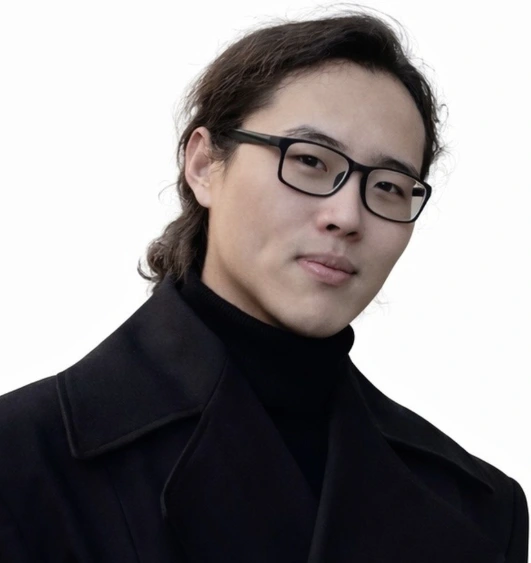

In our conversation with Shane, we explored his distinctive ability to imbue jewellery with meaning beyond its physical form, bringing together thoughtful craftsmanship and artistic expression. His work invites us to look beyond the object itself, revealing the stories, ideas and emotions that give each piece its own identity.
Cultural Memory, Identity and Personal Expression
Your jewellery feels rooted in a dialogue between cultural memory and contemporary artistic expression. What images, memories or experiences from your Chinese heritage continue to surface in your work, and how do you transform them into something that feels entirely your own?
My work comes more from observations of modern society, and it may also be triggered by a particular personal experience or a specific piece of history. My Chinese cultural background is, of course, part of my own experience, but traditional culture is not the main starting point of my practice. The Chinese, or more broadly Asian, elements in my work are things naturally given to me by the cultural environments I have lived through.
For example, the water-vortex symbol in Ancestor derives from patterns in traditional Miao culture. However, I use it not merely to express the influence of traditional culture on me, but because, at a certain moment, this symbol came to overlap with my personal experience. For me, the cultural origin of a symbol is certainly important, but its meaning within the work is ultimately shaped by my personal experience in a modern context.
I am usually first drawn to a specific question or story, and then gradually look for a way to express it. For example, the rings in The Lovers series explore diverse emotional relationships.

My own expression, or the style of my work, tends to emerge gradually through making, experimenting and chance discoveries. For me, these are all ways of artistic expression. I care more about how these approaches respond to the content of the work, which is inevitably understood and transformed through my personal experience.
Thematically, origin is a question I continually return to, and this inquiry also extends to my understanding of myself: my experiences, my feelings and how I connect with the world around me. I think this is precisely where the work plays its role: imperceptibly allowing personal experience to gradually transform into social expression.
What I can do is create.
Jewellery as a Language of Beauty and Permanence
There is a particular poetry in working with precious materials: they carry weight, history, permanence and symbolism. What is it about jewellery as a medium that allows you to express ideas that perhaps could not be expressed through another art form?
I chose jewellery as my medium, first of all, out of a concern with beauty. I was initially drawn into this field by beauty, and today I still regard it as one of the most important factors.
In some contemporary art practices I have encountered, concept sometimes seems to be placed above aesthetics. But for me, especially for an object that is worn, aesthetic value should come first, or at least be as important as conceptual expression. It need not involve precious materials, but perhaps the lustre and permanence of precious materials can play an essential role in beauty, or in the concept itself. The meaning of a piece of jewellery cannot be separated from these qualities, and I also think this is what makes it unique compared with other art forms.
My parents have been in the jewellery trade since I was a child. The first material I encountered was amber, and I was deeply drawn to its elegance and poetry. Later, my family began dealing in antiques, and I gradually realised that objects have a continuity that extends beyond individual lives: the aesthetics and expressions of the past can continue to be perceived in the present through material. This is also what I understand as “eternal expression”.
Jewellery maintains an intimate connection with people while also being able, through inheritance, to carry forward the meaning and beauty of its era. This intimacy at the scale of the body, and this continuity in time, are what attract me most about it as a medium.

The Meaning of Making
Craftsmanship is at the heart of contemporary jewellery, yet the hand of the maker can sometimes disappear behind the finished object. How important is the physical process of making to you, and what role do imperfection, patience and the marks of the hand play in your pieces?
I think the importance of the making process depends on the specific work. Hand marks, imperfection or the time invested in making do not necessarily give a work artistic value. For me, the key is how the way of making participates in forming the meaning of the work.
I choose methods according to what the work needs. Hand marks can be kept, or they can be erased; each of these choices should have its own reason within the work.

Jewellery as Artistic Enquiry
Having studied at the Royal College of Art (RCA), you were immersed in an environment where jewellery could be considered as a form of artistic enquiry rather than simply an object of adornment. How has this way of thinking changed the way you approach materials, form and the relationship between the body and the object?
Studying at the RCA led me to think further about how jewellery can participate in research and carry an ongoing, long-form narrative. This gradually shifted my focus from the completion of a single piece of jewellery to the creative process itself, and to how different media can together constitute a continuously developing narrative.
My graduation project, Ancestor, embodies this exploration. The project originates from the absence of family archives; generational rupture and migration made it difficult for me to trace my ancestral origins. Starting from my own experience of migration, I carried out autoethnographic writing alongside geological stratigraphic experiments.
Writing helped me rediscover objects in my memory; I broke these objects and reassembled them into artificial strata. The material residues, in turn, drove new writing and fiction. Ancestry gradually became a cultural structure continually constructed through traces, narratives and symbols.
The work ultimately took shape as three interrelated parts: a stratigraphic installation, The Book of Origin, and a wearable relic. Symbols generated in the narrative were transformed into jewellery and, borrowing the form of a regalia necklace, organised scattered experiences into a seemingly continuous lineage. The partially melted and collapsing structure, in turn, reveals the instability of this continuity.
I did not root myself entirely in a specific cultural background. For example, I referenced Byzantine jewellery for the form of the necklace, but this is precisely a manifestation of the cultural hybridity that arises under modernity. I myself am also a composite of cultures.
This research process established my understanding of material and form: they jointly participate in the generation of knowledge and meaning. The relationship between body and object also participates in generating meaning. At the same time, as something worn, jewellery must also respond to the body and the practical needs of wearing.


Beauty, Concept and Interpretation
Your recent Bronze Award at the Goldsmiths’ Craft & Design Council Awards brings recognition to your work within the wider jewellery world. Beyond the award itself, what do you hope viewers notice when they look closely at one of your pieces: the material, the construction, the hidden details or perhaps the idea behind it?
What I most hope viewers feel is beauty and concept, and how the two together constitute the work. Beauty always has primary significance for me: it establishes the most direct perceptual connection between people and the work, and gives the concept a form that can be experienced.
Material, structure and detail are equally important, because they concretely determine the integrity of this connection.
In The Lovers, I let beauty dominate visually, while using form and structure to hold contradictory emotions. For example, in Idealistic, a divided heart-shaped gemstone forms a seemingly ideal space, yet this sense of wholeness is built on the destruction of the gemstone’s original wholeness.
I hope that, while appreciating the beauty, viewers gradually sense these interdependent meanings and arrive at their own interpretations. That a concept can provoke ongoing perception and thought, and generate new meanings in different people, is an important part of a work’s value.
The Future of Jewellery as Narrative
Every artist eventually develops a visual language of their own. Looking at your work today, what do you feel you are still searching for? Is there a particular material, technique, form or idea that you have not yet fully explored but feel drawn towards?
I want to continue exploring the possibility of jewellery carrying literary expression: a passage of text, a poem, even a novel. This may be because of my love of narrative. Whether it is a stage script that seems like a magic trick or a fairly serious piece of political commentary, I hope these narratives can all enter jewellery.
Through the organisation of material, structure and symbol, I want to give jewellery the capacity to carry long narratives, so that wearing and viewing become a process of reading that unfolds gradually. Ancestor is the starting point of this exploration.
And, of course, there is beauty.
Follow Shane Yan Shi on Instagram